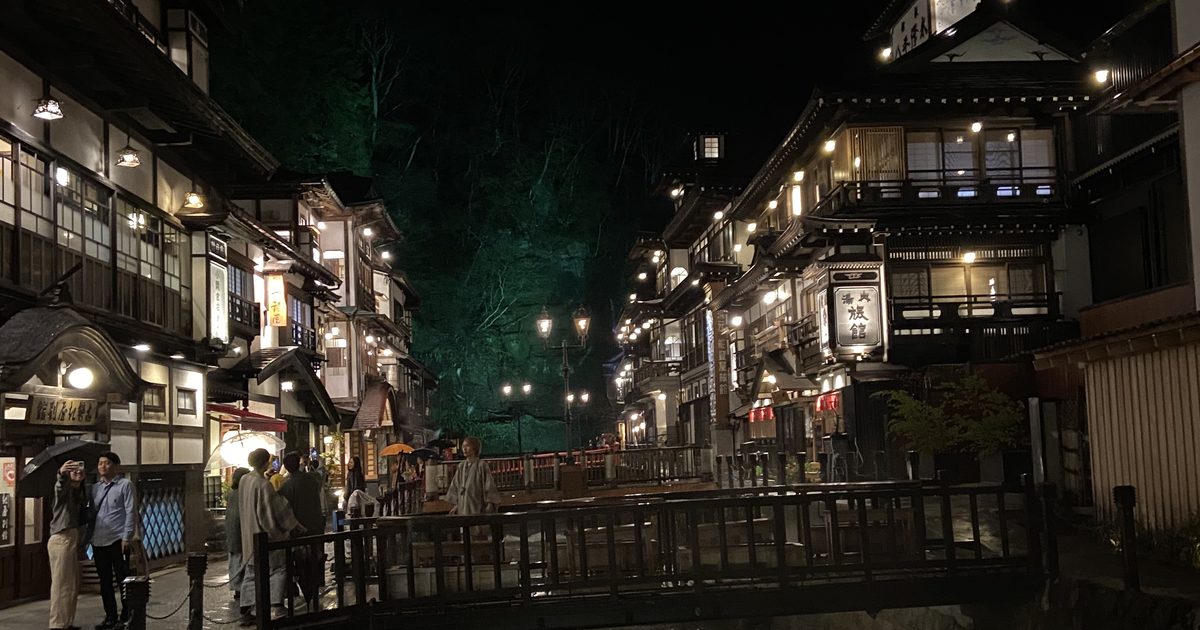
Ginzan Onsen: The Historic Hot Spring Town Lit by Gas Lamps
What Ginzan Onsen is really like — real costs, when the crowds arrive, where to eat, and whether the famous snowy night view is worth the effort to reach it.
A first-hand account of staying overnight at Fukuchi-in, a Buddhist temple lodging (shukubo) on Mt. Koya — shojin ryori dinner, an onsen bath inside a temple, costs, and how to book.
Koyasan (Mt. Koya) is the mountaintop monastery town founded 1,200 years ago by Kobo Daishi, and it is one of the few places in Japan where foreigners can easily sleep inside a working Buddhist temple. I stayed at Fukuchi-in (福智院), one of the town’s shukubo temples, in 2021. Here is what the experience is actually like — including the parts nobody warns you about, and the parts you are quietly allowed to skip.
| What | Overnight temple lodging (shukubo) with dinner and breakfast |
| Cost | I paid ¥24,000 per person with two meals in 2021 — budget a little more now |
| Getting there | Nankai line from Osaka (Namba) + cable car — about 2 hours |
| Book | Directly or via booking platforms; popular temples fill up weeks ahead |
| The Fukuchi-in card | A real natural onsen inside the temple — rare among shukubo |
Forget the image of a bare monk’s cell. Our room was spotless, comfortable, and looked out onto one of the temple’s courtyard gardens — Fukuchi-in is also known for grounds designed by Mirei Shigemori, one of Japan’s great modern garden designers.
Dinner is shojin ryori, the Buddhist vegetarian cuisine: built around vegetables and tofu in many forms, finished with fruit for dessert. No meat, no fish — and you will not miss them as much as you expect.
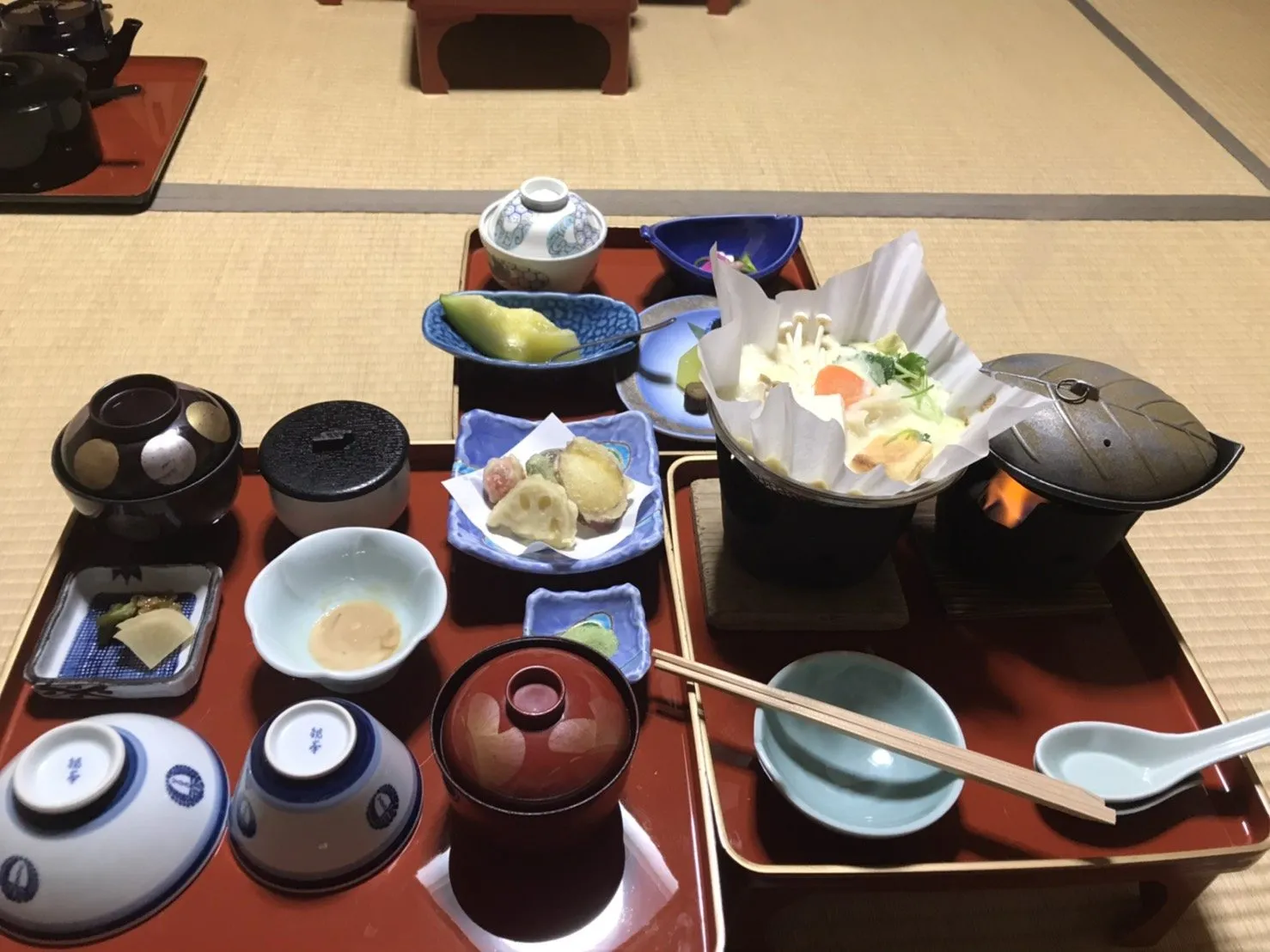
Dinner on the tatami at Fukuchi-in: a paper hotpot simmering over its flame, lotus-root tempura, and melon to finish.
Then there is the bath, which is the reason I picked Fukuchi-in over the other fifty-odd temples: a natural onsen, with a spacious indoor bath and tsubo-style pot tubs in the open air, the water at that just-right temperature you stop noticing. A hot spring soak inside a 1,200-year-old monastery town is not a normal shukubo feature; here it is.
In the morning there is an early prayer service (otsutome) that guests may join. Honest admission: we did not, and nobody minded. It is an invitation, not an obligation — worth knowing if a 6am start is the thing holding you back from a temple stay.
The single best thing to do on Koyasan is the walk to Okunoin, where some 200,000 graves and memorials line the cedar path to Kobo Daishi’s mausoleum. There are two ways in: the traditional two-kilometer approach from the Ichinohashi bridge, or the shortcut from Nakanohashi that halves the distance.
Here is the honest truth for foreign visitors: the gravestones do not announce themselves in English. Unless you read kanji, one moss-covered monument looks much like another. But if Japanese history means something to you — or someone in your group can read the names — walk from Ichinohashi, as we did. Along that stretch lie the graves and memorials of famous samurai lords, and spotting a name you actually know, carved into a centuries-old stone under the cedars, is a genuine jolt. If none of the names would land, take the Nakanohashi shortcut and you lose little of the atmosphere.
Day-trippers thin out toward evening, and staying overnight also puts the dusk and night-tour versions of Okunoin within reach.
One more thing to know: the cemetery path itself may be photographed, but beyond the Gobyo Bridge photography is forbidden — the lantern hall and Kobo Daishi’s mausoleum are camera-free ground. Custom is to remove your hat and bow once before crossing. Put the phone away and walk in; that is rather the point.
Take the Nankai Koya line from Namba to Gokurakubashi, then the cable car up. The Koyasan World Heritage Ticket bundles the round trip and mountain buses at a discount.
A shukubo stay is worth it precisely because it is gentler than its reputation. You get a clean, comfortable room with a garden view, a vegetarian dinner good enough to make you forget what is missing, and — at Fukuchi-in — an onsen to soak in while the town goes quiet outside. The monastic parts are invitations, not tests: join the morning prayers if you want them, sleep in if you do not.
Go if you want one evening inside the tradition instead of a walk past it — and if Japanese history means anything to you, give Okunoin the full Ichinohashi walk. Skip it if what you actually want is nightlife and a late dinner: Koyasan’s evening is silence, and the silence is the product.
What Ginzan Onsen is really like — real costs, when the crowds arrive, where to eat, and whether the famous snowy night view is worth the effort to reach it.
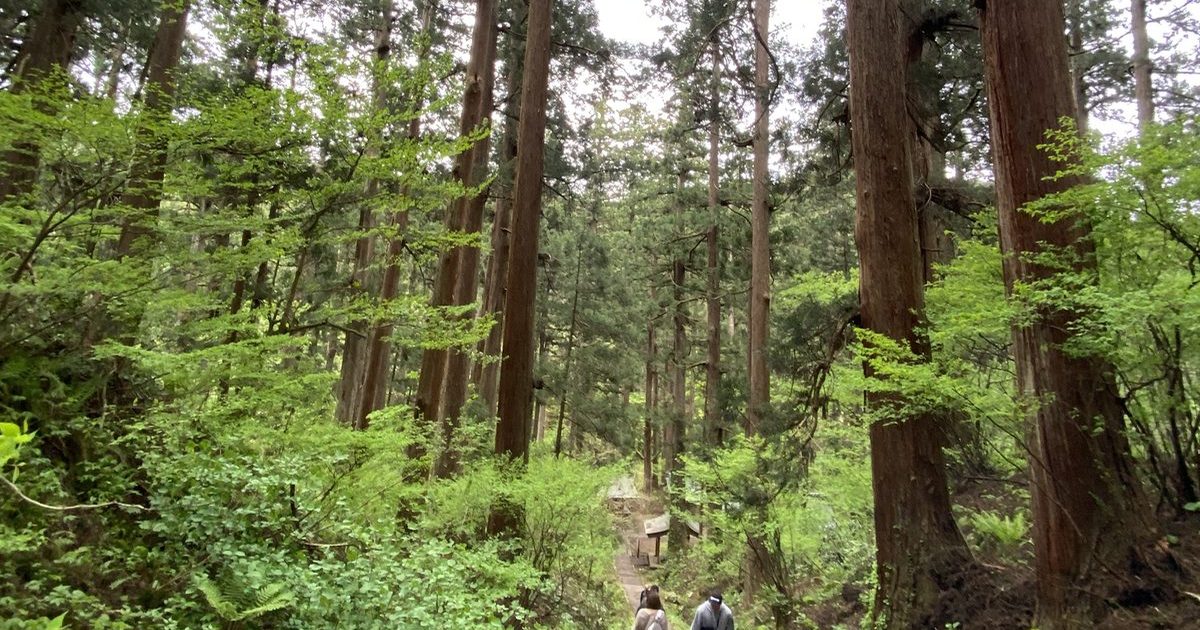
You don't have to climb all 2,446 steps: the five-story pagoda and the giant-cedar approach are near the bottom — and a road runs to the summit shrine. A first-hand guide.